
Nausicaa's Toxic Jungle is the first great forest in the Studio Ghibli canon, and how its heroine looks at it is the whole story. Everyone else sees a forest that kills. Nausicaa sees something to study, and she walks into it alone, with a gas mask, a glider and a collection of glass jars.
Nausicaa opened in Japan on 11 March 1984, a year before Studio Ghibli existed, and its success is the reason the studio was founded. More than forty years later its poisoned forest still looks like nothing else in animation. Here is why the Toxic Jungle still hits, without giving away how the film ends.
A forest of spores a thousand years after the fire

The film opens 1,000 years after the Seven Days of Fire, a war that burned industrial civilisation to the ground. What grew back is the Toxic Jungle, and it is spreading.
Its trees and fungi release spores so poisonous that a few breaths without a mask can kill. Whole kingdoms have been swallowed by it, and the people who are left live in small settlements on its edges, burning any spore that drifts too close. Miyazaki shows all of this in the first minutes without a single line of explanation, through an abandoned village, a mask and a sky full of drifting seeds.
It is one of the great openings in animation. You understand the world, its history and its fear before the heroine has said a word.
A princess with a mask and a sample jar

Nausicaa, princess of the small Valley of the Wind, goes into the jungle on purpose. She collects spores in glass tubes and studies them.
Sumi Shimamoto voices her in Japanese with a calm, curious warmth that makes her bravery feel natural rather than heroic. In the first scene she finds the empty shell of a giant insect, lies beneath it and watches the spores fall like snow. Where anyone else would run, she stops to look.
That small moment defines her. Nausicaa is not a warrior who conquers the forest or a chosen one who purifies it. She is a scientist at heart, and her weapon is attention. The whole film grows out of the idea that something terrifying might be understood if someone is patient enough to look closely.
The Ohmu, giant insects with angry red eyes

The jungle is guarded by insects, and the greatest of them are the Ohmu: armoured giants the size of buildings, with rows of eyes that turn red when they are angry.
Miyazaki makes them both frightening and strangely beautiful. When an Ohmu chases the swordsman Lord Yupa out of the forest, Nausicaa does not fight it. She flies alongside it, calms it with a flash of light and the sound of an insect whistle, and the red in its eyes fades back to blue as it turns for home.
The insects are never monsters in this film. They are part of the jungle, defending it the way any animal defends its home, and Nausicaa is the only person who seems to grasp that. It is a remarkable idea for a 1984 adventure film, and it still feels ahead of its time.
Teto, the fox-squirrel who bites

Lord Yupa, voiced by Goro Naya, has rescued a tiny fox-squirrel from the insects. When Nausicaa reaches for it, the frightened animal bites her finger hard.
She does not pull away. She keeps her hand still, tells it there is nothing to be afraid of, and lets it bite until it understands that she means no harm. Then the little creature licks the wound and climbs onto her shoulder, where it stays for the rest of the film. She names it Teto.
The scene lasts barely a minute and it is the whole film in miniature. Nausicaa meets fear with patience, and fear turns into trust. Teto is cute, of course, and fans have loved him for four decades, but he is also the clearest picture of what makes her special.
A glider that rides the wind

Nausicaa crosses the jungle on her glider, a slim white wing with a small engine that she flies standing up, feeling the air currents through her body.
The Valley of the Wind survives because a steady wind from the sea keeps the spores away, and its people read the wind the way sailors read the waves. Nausicaa reads it better than anyone. Her flying scenes, swooping low over the treetops and lifting off on a single gust, are the first great flying sequences of Miyazaki's film career.
He would go on to fill his films with flight, from Kiki's broom to Porco Rosso's seaplane, but it starts here. The glider gives the Toxic Jungle its sense of scale: a vast, deadly forest, and one small figure skimming above it, completely at home.
A secret room beneath the castle

Deep beneath her father's castle, Nausicaa keeps a secret: a hidden room where she grows the plants of the Toxic Jungle and studies them in peace.
It is a quiet, glowing place, full of strange flowers under soft light, and one of the loveliest backgrounds in the film. Here she can take off her mask, tend her specimens and think. When Lord Yupa discovers the room, he is astonished by what she has managed to do on her own, with nothing but curiosity and stubbornness.
We will not say what she has learned down there, because it is the key to the whole film and it is worth discovering fresh. What matters is that the answer to the jungle comes from a young woman who refused to be afraid of it, and who did the work.
Why the Toxic Jungle still matters

Nausicaa of the Valley of the Wind was written and directed by Hayao Miyazaki from his own manga, which ran in Animage magazine from 1982 to 1994, and was made at the studio Topcraft.
It was Joe Hisaishi's first score for Miyazaki, the start of a partnership that runs through every Ghibli film since. Its success led to the founding of Studio Ghibli in 1985, which is why it is now counted among the studio's films. And its idea of nature, dangerous but not evil, became the backbone of Princess Mononoke and much of what followed.
If you know Ghibli only through Totoro and Spirited Away, start here. The Toxic Jungle is where Miyazaki first asked the question that runs through all his work: what if the thing we fear is something we simply have not understood yet?
Where to watch
Streaming catalogues for Studio Ghibli differ between the USA, the UK, Canada and Australia, and they change from month to month, so check the services you use.
Shop the Studio Ghibli collection
Liked Studio Ghibli? This is where it leaves the screen: every Studio Ghibli design we carry, in one place.
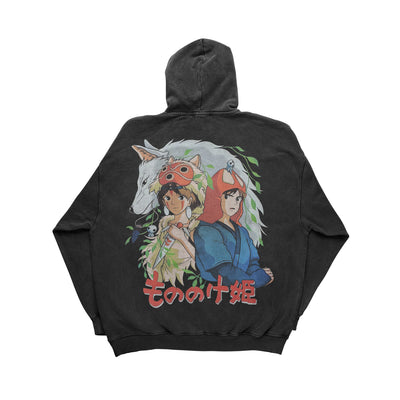
 Princess Mononoke San & Ashitaka Vintage Anime Hoodie Double Sided$24.99
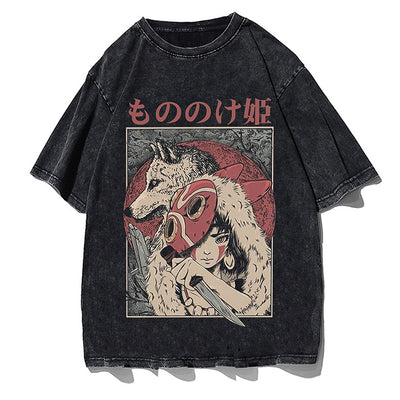
 Studio Ghibli Mononoke Hime Vintage Oversized Graphic T-Shirt$20.99
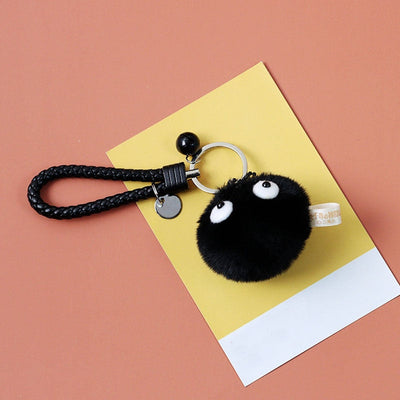
 Studio Ghibli Spirited Away Susuwatari Soot Sprite Plush Keychains$11.99
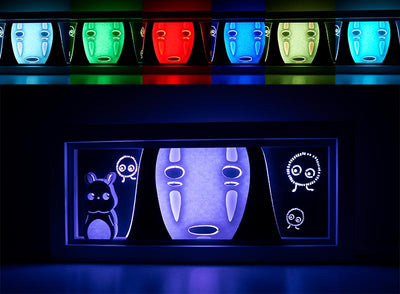
 Studio Ghibli Spirited Away Kaonashi No Face RGB Led Light Box$19.99
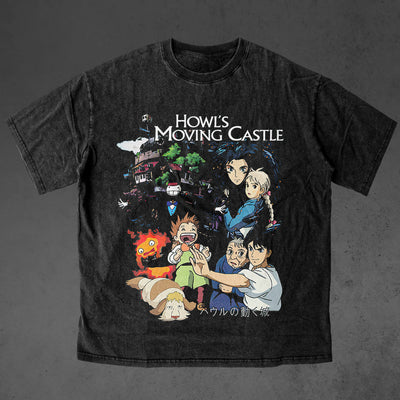
 Studio Ghibli Howl's Moving Castle Oversized Graphic T-Shirt$20.99
 Studio Ghibli Embroidered Jet Tag Keychain - Calcifer (Howl's Moving Castle)$9.99
Sources: Studio Ghibli, Nausicaa of the Valley of the Wind (official), Ghibli Museum, Mitaka (official).