
Osono may be the warmest grown-up Studio Ghibli ever put on screen, and the first adult who treats Kiki as a person with a future. She runs a bakery in the town of Koriko, she is expecting a baby, and she has exactly no reason to help a stranger in a black dress. She helps anyway.
Kiki's Delivery Service opened in Japan in July 1989 and became the most successful Japanese film of that year. It is a film about a young witch on her year of training away from home, and most of that year happens in a room above Osono's shop. Here is why the baker is the quiet heart of the film, without giving away how Kiki's year turns out.
A thirteen-year-old with nowhere to sleep

Kiki is 13, and tradition says a young witch must leave home on a full-moon night and live for a year in a town with no witch of its own.
She chooses Koriko, a busy port with a clock tower, a sea view and streets full of cars. The town does not need a witch. A policeman scolds her for flying into traffic, a hotel wants papers she does not have, and the townspeople are too busy to look up. Within an hour of her arrival the big adventure has turned into the oldest problem there is: where to spend the night.
Miyazaki takes this seriously. Kiki's fear is not of monsters but of being unwanted, and every child who has started at a new school will recognise the feeling. It makes the next scene land like a sunrise.
A forgotten pacifier and a favour returned

Kiki meets Osono by accident. A customer leaves the bakery without her baby's pacifier, Osono runs after her too late, and Kiki flies the pacifier down the street.
It is a tiny act, done without thinking, and it tells Osono everything she needs to know about the girl. She invites Kiki in for a cup of coffee, asks where she is staying, and listens to the answer. There is no speech about kindness and no music telling you how to feel. Osono simply notices that a child is in trouble and decides that this is now partly her business.
Keiko Toda voices Osono in Japanese with a big, easy laugh that fills the shop. She sounds like someone who has fed a lot of people and never once counted the cost.
A room above the flour store

Osono offers Kiki the spare room above the bakery's flour store. It is dusty, it smells of bread, and Kiki has to scrub the floor on her knees before she can sleep there.
This sequence is one of the most loved in all of Studio Ghibli. Kiki unpacks her few belongings, opens the window on the rooftops of Koriko and counts the coins she has left. She goes shopping for a pan and works out that a single frying pan costs more than she can comfortably spend. Being independent, it turns out, is mostly arithmetic.
Miyazaki fills the room with small, true details: the bucket of water, the bare bed, the view that makes it all worth it. Fans have spent more than thirty years wishing they could rent it.
The silent baker who makes the sign

Osono's husband, Fukuo, is a huge, silent baker who barely says a word in the whole film. He communicates in bread.
When Osono suggests that Kiki could earn her keep by delivering parcels on her broom, Fukuo answers the way he answers everything: with his hands. Overnight he bakes a sign for the new business, a wreath of bread with a little witch on a broom at its centre, and hangs it in the shop window. It is the closest thing to a welcome speech the film has, and he never says a line of it.
Together Osono and Fukuo form the gentlest kind of foster family. They give Kiki space, food and a door that opens onto the street, and then they trust her to do the rest.
Kiki's Delivery Service opens for business

With a telephone in the bakery and a sign in the window, Kiki's Delivery Service is in business. Osono takes the first bookings at the counter.
The first job is a birdcage holding a stuffed black cat, a birthday present for a little boy across town. Kiki loses the toy in a forest on the way, and Jiji, her real black cat, has to sit in the cage and pretend to be stuffed while she searches. He spends a very long afternoon in a house with a large, sleepy dog, and it is one of the funniest sequences Ghibli ever animated.
What makes the business work, though, is Osono. She treats a thirteen-year-old's idea as a real company, introduces Kiki to her customers and makes sure nobody takes advantage of her.
An adult who never takes over

Osono's greatest gift to Kiki is what she does not do. She never tells Kiki how to be a witch, never solves her problems and never asks her to be grateful.
Most films would turn a character like Osono into a mentor with wise lines to deliver. Miyazaki does something rarer. Osono is busy, pregnant and running a shop, and she helps in the gaps of her own life, with a meal, a dress, a phone message or a laugh. When Kiki has a bad day, Osono does not lecture her. She makes sure there is something to eat.
That is why so many viewers come back to this film as adults and suddenly see Osono in a new light. She is the kind of grown-up you only fully appreciate once you have needed one.
Why Osono still matters

Kiki's Delivery Service was adapted by Hayao Miyazaki from Eiko Kadono's 1985 novel, made at Studio Ghibli and scored by Joe Hisaishi.
The novel already had Osono, and Kadono went on to write five more Kiki books between 1993 and 2009, followed by a live-action film in 2014. But the film gives the baker a weight that lingers. In a story about a girl learning to stand on her own, the most important character is the woman who gives her somewhere to stand. The film is honest that independence needs a floor to start from, and Osono is that floor.
If you have only seen Kiki's Delivery Service as a child, watch it again with your eyes on the bakery. It is one of the kindest films ever made about leaving home, and Osono is the reason it feels so safe.
Where to watch
Streaming catalogues for Studio Ghibli differ between the USA, the UK, Canada and Australia, and they change from month to month, so check the services you use.
Shop the Studio Ghibli collection
Liked Studio Ghibli? This is where it leaves the screen: every Studio Ghibli design we carry, in one place.
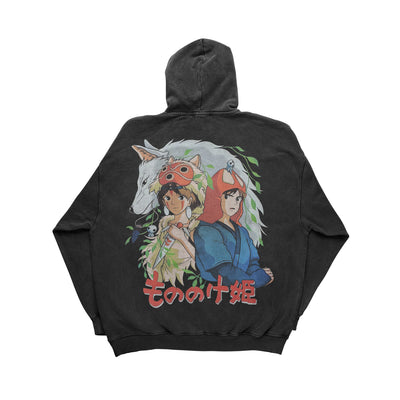
 Princess Mononoke San & Ashitaka Vintage Anime Hoodie Double Sided$24.99
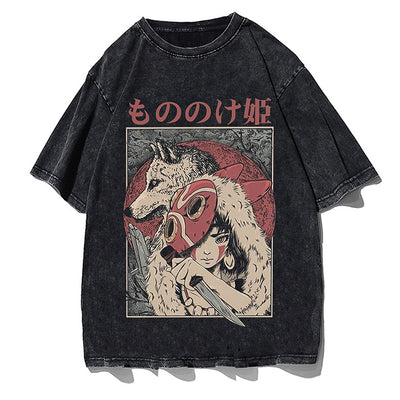
 Studio Ghibli Mononoke Hime Vintage Oversized Graphic T-Shirt$20.99
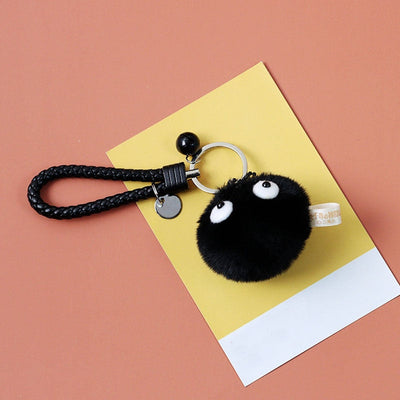
 Studio Ghibli Spirited Away Susuwatari Soot Sprite Plush Keychains$11.99
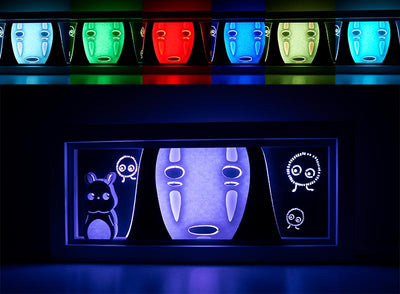
 Studio Ghibli Spirited Away Kaonashi No Face RGB Led Light Box$19.99
 Studio Ghibli Howl's Moving Castle Oversized Graphic T-Shirt$20.99
 Studio Ghibli Howl's Moving Castle Fire Demon Calcifer Anime Candles$24.99
Sources: Studio Ghibli, Kiki's Delivery Service (official), Ghibli Museum, Mitaka (official).